
Skucast › Industries
Running a dealership, a clinic, a property manager and more today
One system.
Every business.
Products, services, appointments or rentals — one platform for all of them.
Every business needs the same few things: to be found online, to take the booking or the order, to get paid, to answer customers and to keep the books. Skucast does all of it from one set of records, then adds the tools your industry needs on top. The spine is the same whether you sell trailers, cleanings, checkups or apartments.
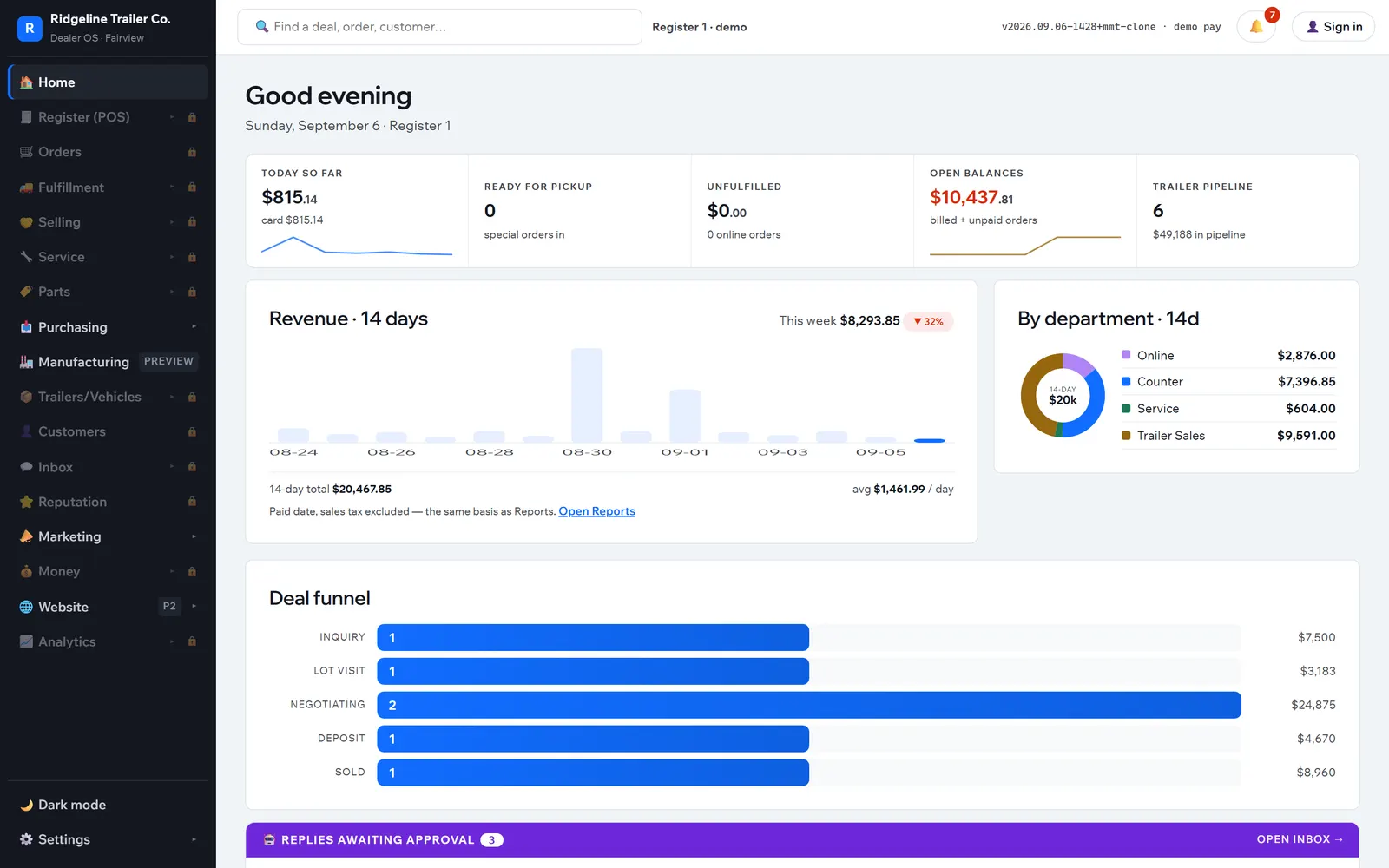
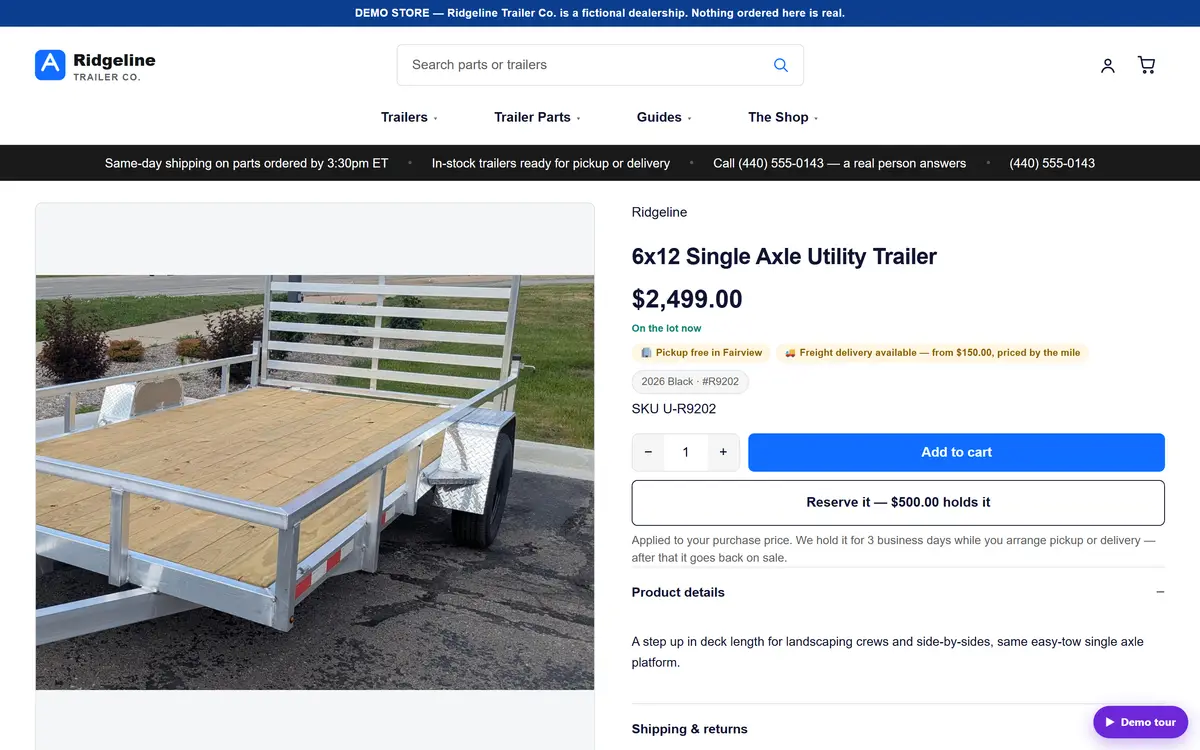
One login, one set of numbers, whatever the business sells.
Retail & parts sellers
Retail, Parts, Hardware And Specialty Stores
Thousands of small-ticket lines, a counter that has to be fast, suppliers with real lead times, and shoppers searching a part number at ten at night. None of that needs a unit, a VIN or a title.
- The catalog lives twiceOnce in the counter system and once on the website, joined by an export nobody trusts. The price is right in one of them, and you find out which from a customer.
- Reordering is a gut callA slow-moving part and a part with a six-week lead time need different answers, and a stock report gives you neither. So you buy what you noticed you were out of.
- Nobody local knows you have itThe person three miles away searching for the part is shown a warehouse two states away, because nothing tells Google what is on your shelf today.
The modules that answer them
- CatalogPrice, cost, margin, stock and status — plus placement: the menu paths and collections that let a shopper find it. Kits derive their stock from their components rather than carrying a count of their own.
- Register, Orders and FulfillmentScan or search, take the tender, close the drawer with a blind count and a Z-report. Web, counter, phone and marketplace orders sit in one ledger with the same numbering and the same refunds.
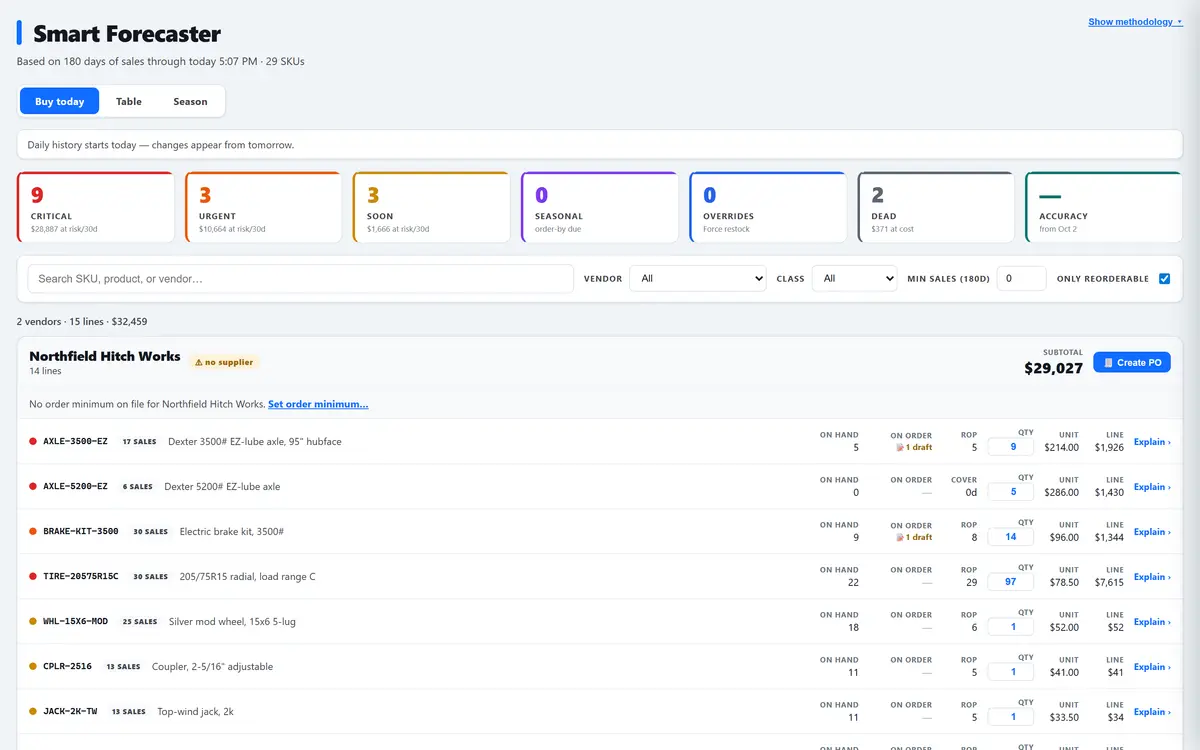
- Purchasing · ForecasterEvery part scored on its own sell-through and its own supplier lead time, sorted into tiers — critical, urgent, buy soon, dead — and grouped by supplier with a Create PO button on each group.
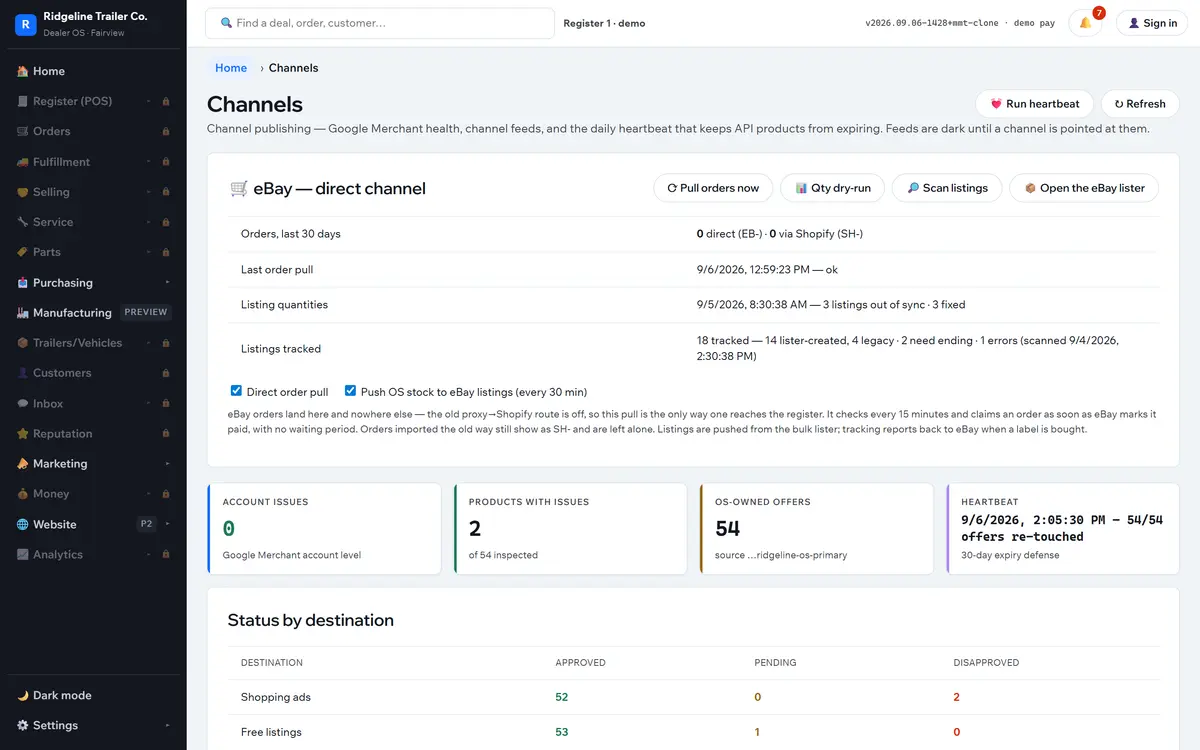
- Channels · Shopping and Local InventoryThe same catalog feeds Google Shopping, free listings and Local Inventory, plus Meta, Bing and a fee-guarded eBay channel. Channel health is shown destination by destination.
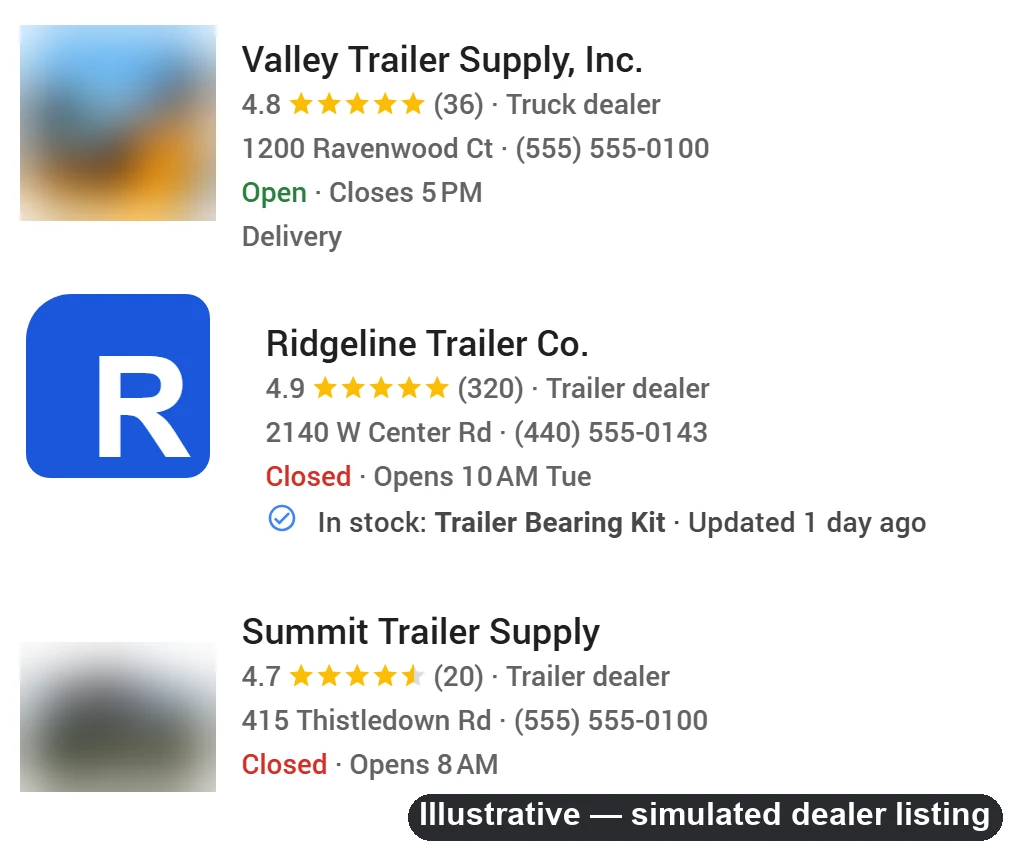
How a shopper sees it: the local pack with the in-stock badge Skucast’s local inventory feed puts there. Illustrative. - ReputationReviews published on your own product pages, with moderation. The ratings and the search value belong to the store, not to a rented widget.
What runs by itself: the forecaster re-scores on its own and the vendor on a draft purchase order comes from the last receipt for that part; receiving credits stock and sets the new landed cost; the shopping and local feeds regenerate on a schedule; the review request goes out after the order is delivered.
Dealers
Trailer, Marine, Powersports And Auto Dealers
This is where Skucast was built, on a working trailer lot. Serialized units, deposits, freight, titling and vehicle feeds are first-class parts of the system, not a module somebody bolted onto a general retail app.
- The thing on the lot is the hardest thing to sell onlineEvery platform can sell a bearing kit. Almost none can take a deposit on one specific trailer, hold that VIN, and write the balance order behind it.
- The paperwork is a second jobTitle application, manufacturer’s certificate of origin, police book, stock numbers. Re-typed from the deal into a form, then typed again somewhere else.
- Sold on Saturday, still listed on MondayA unit that left the lot is still live in the vehicle feed, on the website and on Marketplace, so the phone rings about a trailer you do not have.
The modules that answer them
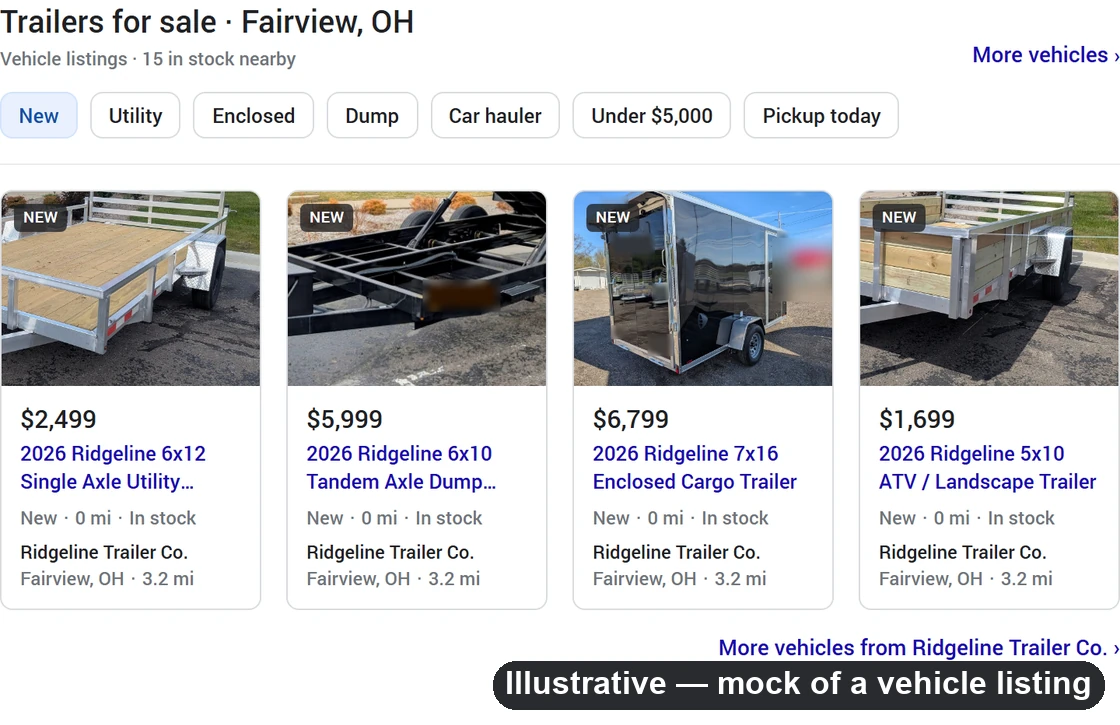
- Units · serialized inventoryVIN, stock number, model code, landed cost, days on the lot, title status and photos — one physical thing, never a quantity in a bin. The screen names what a unit is missing before a feed rejects it.
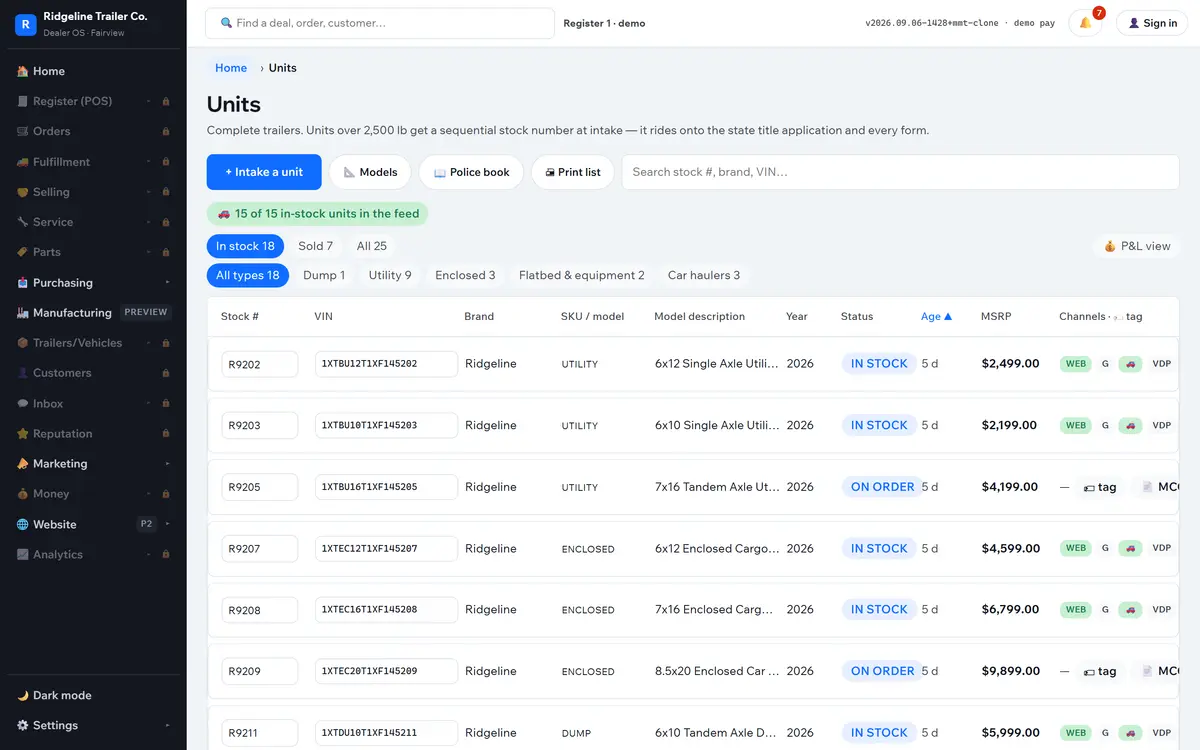
- Quotes & big-ticket dealsEvery quote carries a public, signed pay link. On a unit that link takes the deposit, not the whole balance, with the terms stated above the form.
- Titling & paperworkState title application, manufacturer’s certificate of origin on a controlled form range, the police book and sequential stock numbers, all off the intake record.
- Channels · Google Vehicle ListingsOne row per VIN in the vehicle feed, alongside the Shopping, Local Inventory, Meta and Bing feeds for everything else you sell.
- Service deskRepair orders on a stage board with a scheduler, inspections, warranties and vendor claims. A tech asking for a part becomes a tracked request that turns into a purchase order.
What runs by itself: the deposit clears and the system binds the oldest free unit of that model, holds it, and writes the balance order with the deposit already applied — and the day it sells, the unit retires itself out of the vehicle feed, the storefront and the marketplace listings.
Home & field services
Contractors, Cleaners, Concierge And HVAC
You sell your time and your crew. The work happens at the customer’s door, the quote lives in a text thread, and the payment chases you for a week after the job is done.
- Quotes go coldA price sent by text with no way to say yes is a price the customer forgets. By the time they call back, they booked someone else.
- The schedule lives in someone’s headJobs, crews and follow-ups sit in a paper calendar, a phone and a whiteboard. Nobody can see the whole week at once.
- Getting paid is a second jobInvoices go out late, deposits are taken in cash, and nobody can say who still owes what.
The modules that answer them
- Quotes with a pay linkEvery quote carries a signed pay link. The customer taps it and pays the deposit or the full amount from a phone.
- Schedule & work ordersJobs on a stage board with a scheduler, notes and photos from the job site, and approvals sent as a text with a link.
- Inbox & textingTwo-way texting, calls, email and web leads in one shared inbox, one customer per row. A missed call gets a text back within a minute.
- Website & GoogleYour own website, your Google Business Profile, and Local Services Ads leads landing in the same inbox as every other lead.
- ReviewsA review request after the job, only to customers who agreed to hear from you.
What runs by itself: the deposit clears and the job is booked; the approval text moves the job stage when the customer taps it; the review request goes out after the work is done.
Shaped to how you work
Every service business runs a little differently. We set Skucast up around your services, your crew and your area, and build what you need that it does not do yet.
Appointment businesses
Clinics, Salons And Studios
You sell time on a calendar. A no-show is lost money, a phone that rings during a visit is a booking you miss, and the payment rules are not always simple.
- Booking by phone onlyIf the only way in is a call during business hours, the customer who searched at nine at night books with someone else.
- No-showsA visit nobody reminded the customer about is a visit that does not happen, and the slot is gone.
- Payments with rulesDeposits, packages, memberships and HSA or FSA cards each need handling, and a generic card reader handles none of it.
The modules that answer them
- Online bookingCustomers pick a service and a time on your own website. You set the hours, the staff and the rules.
- Payments & membershipsPay at booking, take a deposit, or bill a membership every month. HSA- and FSA-eligible payments where your services qualify.
- RemindersConfirmations and reminders go out before the visit, to customers who agreed to get them.
- InboxQuestions by text, email and web form in one shared inbox, against the right customer.
- Website & GoogleYour own website and Google Business Profile, so the customer who searches finds a book-now button, not a phone number.
What runs by itself: the booking lands on the schedule; the reminder goes out before the visit; the payment files itself against the customer.
Running today
A licensed healthcare practice runs its online booking, HSA- and FSA-eligible payments and appointment reminders on Skucast today, from its own website.
Property management
Property Managers And Rentals
You sell a place to live or work, month after month. The listing has to be seen, the rent has to come in on time, and the tenant has to hear from you in a way that is kind but clear.
- Vacancies cost money every dayA unit nobody can find online is a unit that stays empty another month.
- Rent collection by handChecks in the mail, transfers with no memo, and a spreadsheet to work out who has paid.
- Messages scattered everywhereNotices, reminders and replies go out from a personal phone, and nobody else can see what was said.
The modules that answer them
- Listings on your websiteAvailable units on your own site, with photos and details, and the listing ready to share.
- Rent collectionRent by card or bank, collected on the due date, filed against the tenant and the unit.
- Tenant messagesReminders and notices from the business, not a personal phone, with the history kept on the tenant’s record.
- ReportsWho paid, who is late and what came in this month, without a spreadsheet.
What runs by itself: rent is collected on the due date; reminders go out before it is due; every payment files itself against the right tenant.
Running today
Crown Property Services runs its property management and rentals on Skucast today, including rent collection.
Every business
What Every Business Gets
Whatever the industry, you have a door, a phone and a website that is supposed to be the same business. Right now it is a second business you also run. These are the problems every business on Skucast stops having.
- Two systems, one argumentThe website says one thing, the shop system says another, and nobody can say which of the two was wrong first.
- Messages arrive in four placesA text to the shop phone, a voicemail, a website form and a marketplace message — four inboxes, none of which know the customer already has an order or a booking open.
- Ad spend that reports on itselfThe ad platform grades its own homework with return on ad spend. A high-revenue, low-margin campaign looks like your best one.
The modules that answer them
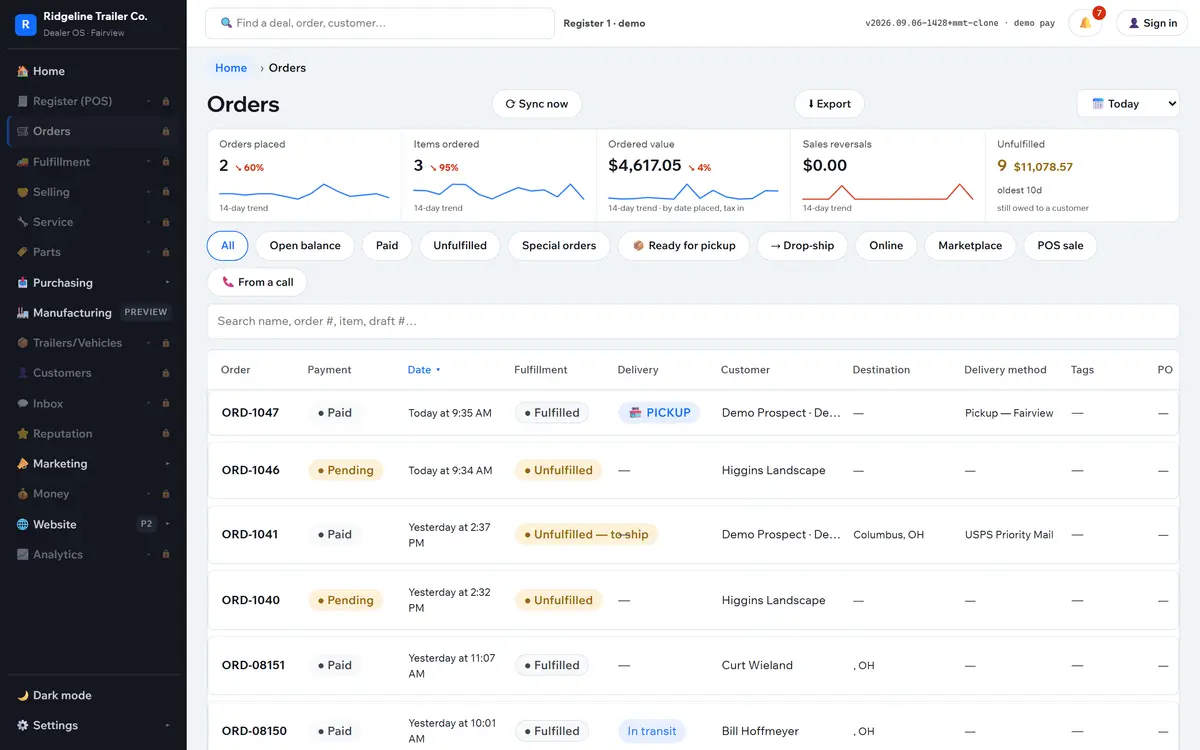
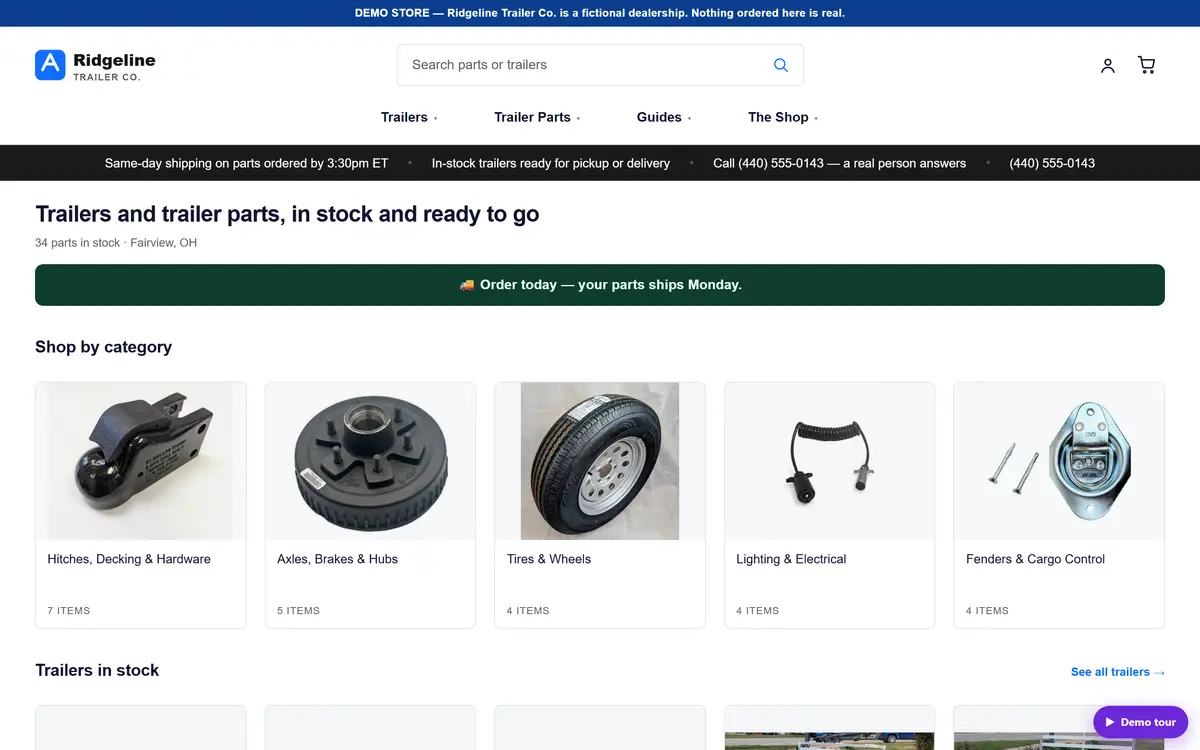
- One business and one websiteYour website is your own site on your own domain — pages, products or services, booking, reviews, guides, a sitemap and site search — reading the same rows your staff works from. There is no export step and no second platform. If you stock products, what is on the shelf right now also goes out to Google Local Inventory.
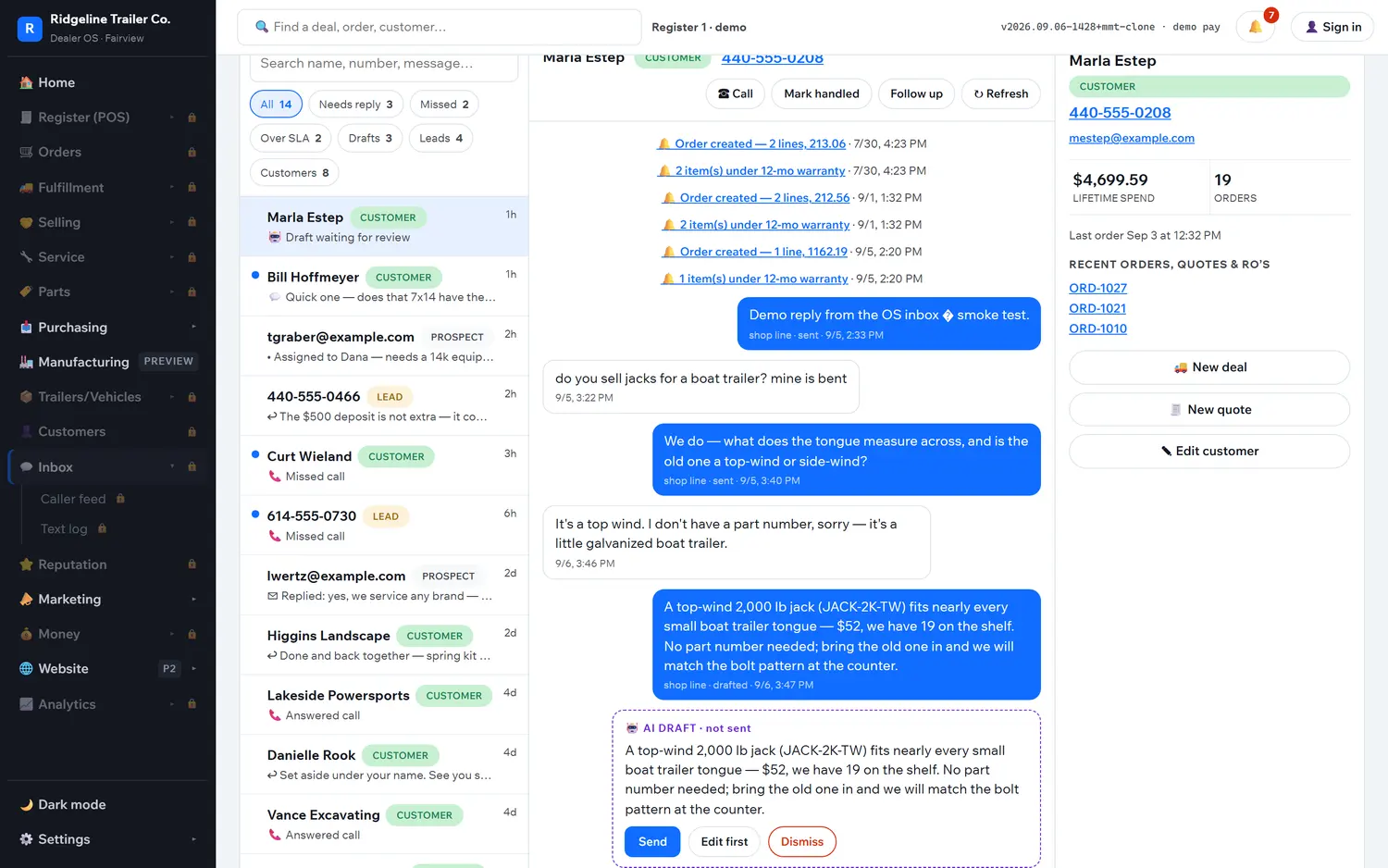
How a shopper sees it: the local pack with the in-stock badge Skucast’s local inventory feed puts there. Illustrative. - InboxTexts, calls, email and website leads in one thread list, one customer per row, with triage chips for needs reply, missed and over SLA. Replies are drafted from your own business knowledge and wait in a box marked not sent.
- Marketing desksA Google desk, a social desk and a combined view: campaigns, feed health, site analytics and search terms on one screen, with every order and booking attributed back to the ad that produced it — ranked by the gross profit they actually brought in.
- Money & complianceReceivables aged by bucket, payables, card batches and settlement, sales-tax rules and nexus by state computed live at the cart, and an end-of-day close.
- Mobile app & widgetA native Android app on your team’s phones, the same system on an iPhone home screen, and a widget carrying today’s revenue, margin, sessions and ad spend.
What runs by itself: a missed call gets a text back within a minute; a web order or booking lands in the same records your staff uses, so the site and the business never disagree; tax is computed live at the cart; and a native push alert opens the actual record on tap.
Straight answer
What You Would And Would Not Turn On
We would rather tell you now than in month three. Every business gets the core. The industry tools are real, and you only switch on the ones that fit.
Every business uses these
Your website, Google and social listings, customers, inbox and texting, quotes and pay links, payments, orders, reviews, findability, marketing attribution, reports, money and compliance, the mobile app, settings and roles.
Switch on what fits
Stock and ship: catalog, register, fulfillment, purchasing, receiving and shopping feeds. Dealers: units, deposits, VIN binding, freight, titling and vehicle listings. Services: scheduling and work orders. Appointments: online booking and reminders. Rentals: listings and rent collection.
Don’t see yours?
If You Sell It, We Can Get It Seen
You name it, we build it. Tell us what you sell and how you work today. We send your own login to a furnished demo business, then shape Skucast around yours.
Simple monthly plans — ask us for details. Setup includes importing what you sell, your website, and your listings registered with each channel.